

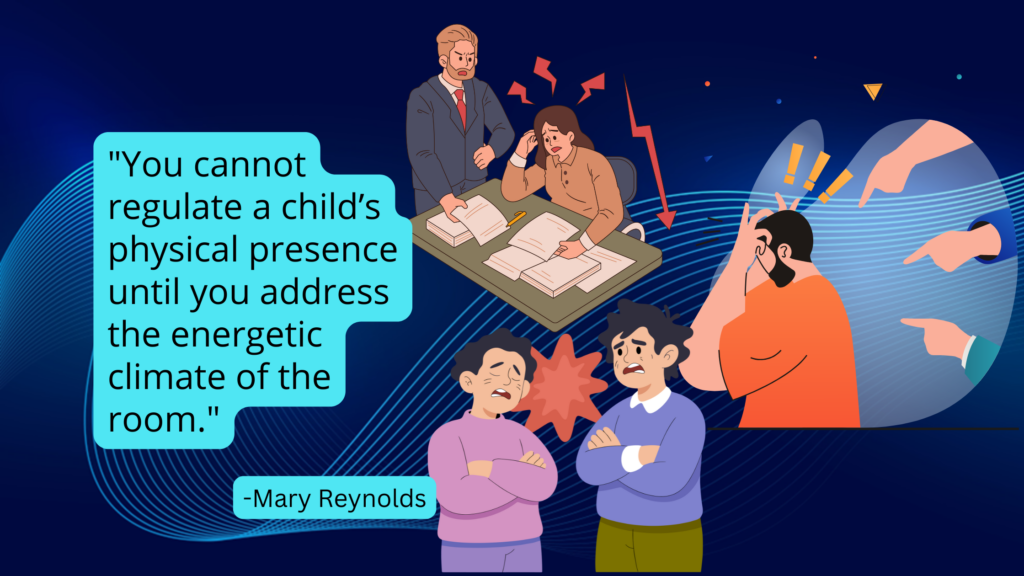
Your Energy, Their Outcome: Is Your Vibe Crushing or Lifting?
What Two Bullied Plants Can Teach Us About Classroom and Home Behaviors
In 2018, IKEA collaborative conducted a fascinating, viral experiment in a Swedish school. They took two identical Dracaena plants, placed them in the same environment, and gave them the same amount of water, sunlight, and fertilizer.
There was only one variable: the energetics—vibrational frequency—of the words they received, as the experiment framed it.
WATCH FULL ENERGY HACKING WEBINAR HERE
For 30 days, school children recorded compliments for one plant and insults and negative words for the other. By the end of the month, the praised plant appeared to be thriving, while the other looked visibly wilting, yellowing, and drooping.
Skeptical?
You might think a plant doesn’t have a brain—and you’d be right. But as neuroscientist Greg Gage points out, while plants lack neurons, they communicate using electrical activity and ions in ways that can resemble our own nervous systems. Decades earlier, researchers tracking plants on polygraph machines reported immediate electrical spikes when the plants were threatened or abused.
Similarly, Dr. Masaru Emoto’s famous 1990s rice-and-water experiments were presented as showing that the physical structure of matter shifts in response to the “vibe” of the thoughts and voices around it.
If a simple houseplant structurally collapses under the weight of negative energy, what do you think happens to a highly sensitive child navigating a high-stress environment?
These two experiments can challenge a major, frustrating problem for adults: the illusion that compliance strategies (like charts, consequences, and lectures) are the most effective way to change a child’s behavior.
When dealing with intense (MTSS) Tier 2 and Tier 3 behaviors—whether a child is exploding with rage or imploding with silent withdrawal—adults naturally focus on managing the visible symptoms. We assume that if we just find the right words, punishments, or reward systems, the behavior will stop.
The science behind these experiments shatters that illusion and solves three critical problems:
- Energetics Influences “Invisible” Stress into a Tangible Reality
Adults often struggle to understand why a child suddenly acts out when “nothing happened.” The polygraph and plant experiments suggest that biological matter can respond to unspoken, invisible electrical and energetic currents. The problem this solves is excessive misdiagnoses.
It shows that children aren’t just “being bad” nor do they have any one of the 48 acronyms’ disorders now used to label children with. Their nervous systems may be reacting to the stress, anxiety, or unexpressed frustration of the adults and environments around them.
- Energetics Highlights the Danger of the “Compliance Trap”
The IKEA bullied plant experiment highlights the danger of the “compliance trap.” In education and parenting, we often use heavy-handed authority or negative pressure to force a child to behave. The plant study suggests that even if an environment provides the perfect physical resources (the right curriculum, food, housing, or rules), a negative energetic atmosphere can lead to structural, internal wilting. It suggests that forcing compliance through negativity may damage a child’s capacity to thrive.
- Energetics Offers a Faster, Efficient, and Replicable Path to De-escalation
When a situation goes sideways, adults often get trapped in an emotional power struggle, which can escalate the behavior. By demonstrating that plants and water physically alter their structure in response to external frequencies, the science offers adults a practical solution: Coherent Co-Regulation (or Energy Hacking).
Instead of wasting time fighting the behavior, the adult learns to change their own internal state first. Energy first, tools second. Because a child’s nervous system may mirror the adult’s energy, shifting your state may be the fastest way to help a child move out of fight-or-flight so they can develop long-term self-regulation.
WATCH FULL ENERGY HACKING WEBINAR HERE
This Week’s TurnAround: Flip the Script on Behaviors
When things go sideways in a classroom or at the kitchen table—when a child experiences an explosive or implosive behavioral meltdown—our traditional instinct is to manage the symptoms. We look at MTSS Tier 2 and Tier 3 interventions through the lens of compliance, charts, and consequences.
But as a Former Problem Child who regularly tested the limits of my own teachers, parents, and school administrators, I can tell you firsthand: children don’t explode because they want to. In this view, they explode because they absorb and respond to the room’s invisible energetic currents.
When an adult walks into an intense situation already carrying stress, frustration, or a desperate need for control, the child’s nervous system can mirror that energy. It’s quantum interconnectedness in real-time. If we want to turn intense behaviors around quickly, we have to stop trying to force compliance and start practicing what I call Energy Hacking.
What is Energy Hacking?
Energy Hacking is the deliberate shift of an adult’s inner state to coherently co-regulate a dysregulated child. It is the understanding that your “vibe” can be an actual, measurable energetically transformative tool.
Leaning into replicable, evidence-based science shows that energetic importance isn’t “wishful thinking”—it can be biological reality. To shift a Tier 3 behavior, the adult must first change the frequency of the interaction within themselves.
- Before you speak: Check your own internal polygraph. Are you reacting out of fear and anger, or are you offering a grounded soothing vibe for the child to anchor to?
- Look past the behavior: The wilted plant didn’t need to be punished for wilting; it needed a change in the energetic output of its environment.
- Prioritize Connection Over Compliance: Getting to the heart of the struggle first is what matters most. When a child feels safe, their nervous system can drop out of fight-flight-freeze-or-fib mode, opening the door to actual skill mastery.
From Survival to Long-Term Thriving
When we master the Energetics of Behavior, we stop playing whack-a-mole with outbursts and start building long-term, self-regulating, self-advocating with our youth.
If you are ready to move past the surface-level strategies and dive deep into the heart, mind, and science behind adult-child dynamics, it’s time to shift the paradigm.
Let’s stop trying to fix the wilting leaves and start healing the environment they grow in.
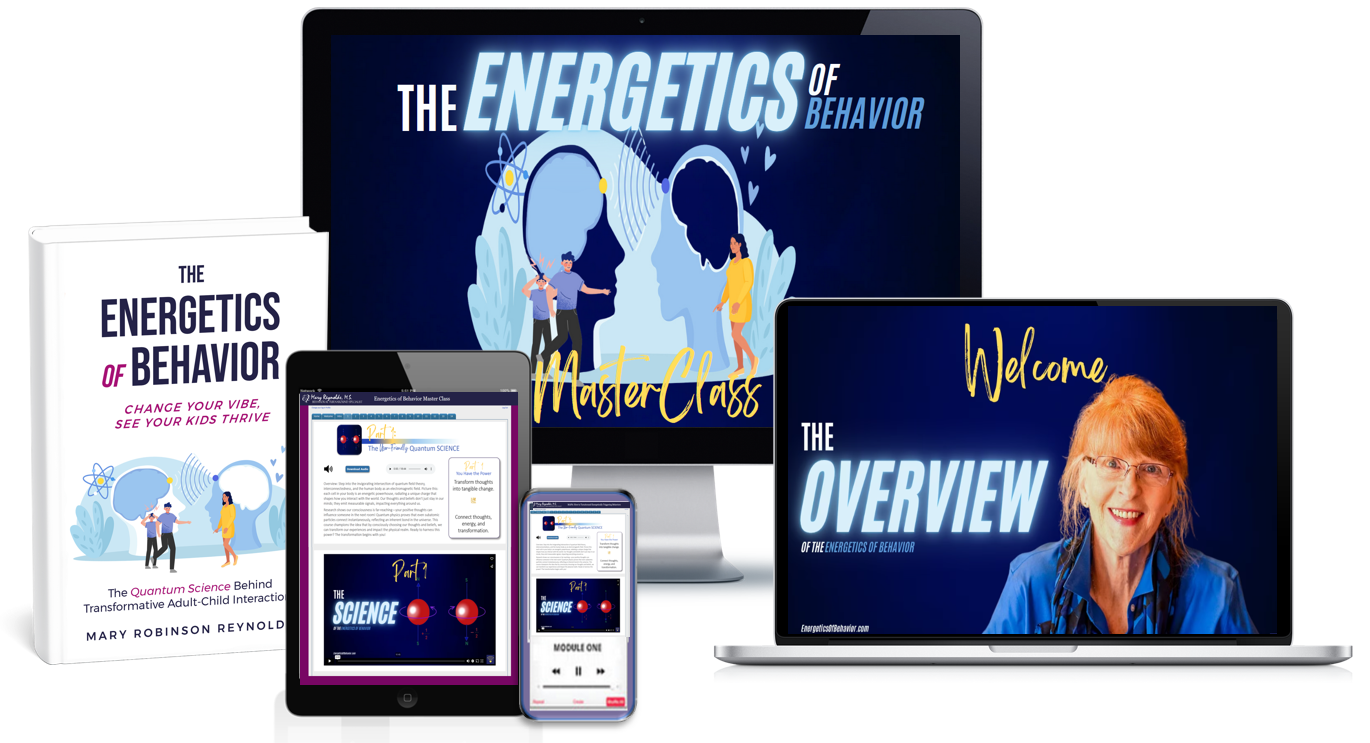
Discover how to change your frequency and transform your relationships
in my newest book and companion online program:

INTERESTED IN SCHOOL-WIDE? LET’S TALK!
What is your biggest challenge when trying to stay grounded during a child’s explosion, implosion, struggle? Let’s discuss in the comments.
